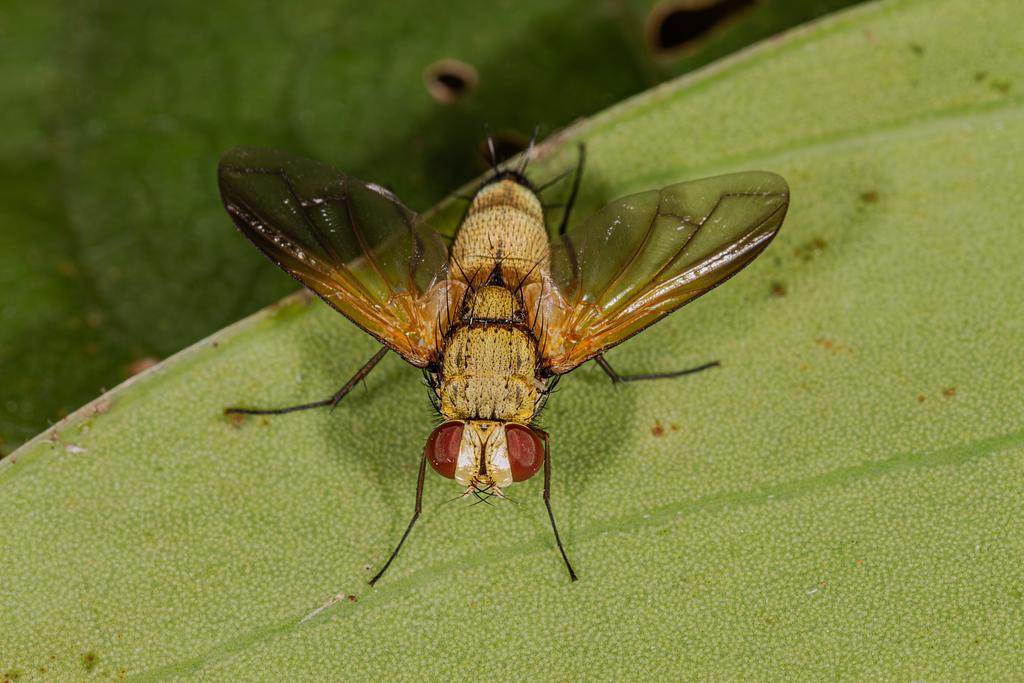
Tachinids in action: on the biology and diversity of bristle flies
Vortrag
20.02.2026, 19:00
Dr. Marcelo de Santis
Gasthaus „Ottakringer Stub’n“, Ottakringer Straße 152, 1160 Wien
Among the vast order of flies (Diptera), the bristle flies (Tachinidae) stand out as the dominant group of parasitoids. With over 8,500 described species, they form the second-largest family of flies. Typically larger and noticeably bristlier than a common house fly, tachinids display incredible variety. They range from 2 to 20 mm in size and come in a wide array of shapes, colors, and degrees of hairiness. The family is divided into four subfamilies. The Phasiinae is the smallest group, followed by the Dexiinae. The two largest and most species-rich subfamilies are the Exoristinae, which are often uniformly grayish-black and moderately bristly, and the Tachininae, which are an especially morphologically diverse group, including some of the largest, most colorful, and most bristly members of the family. All tachinids are internal parasitoids, meaning their larvae develop inside other arthropods. They exploit hosts from at least 15 different orders, but the majority target the larvae of butterflies/moths, beetles, and sawflies, as well as adult beetles and true bugs. By attacking these primarily plant-eating insects, tachinids play a crucial regulatory role in both natural and agricultural ecosystems, making them a key component of terrestrial habitats worldwide. The extraordinary evolutionary success of the Tachinidae is linked directly to their parasitic lifestyle. They have evolved a fascinating array of adaptations to infect their hosts, including remarkable anatomical and functional specializations in the female reproductive system and their eggs. In this talk, I will explore this stunning diversity and these adaptive strategies, with a special focus on specimens from the Natural History Museum of Vienna's collection.